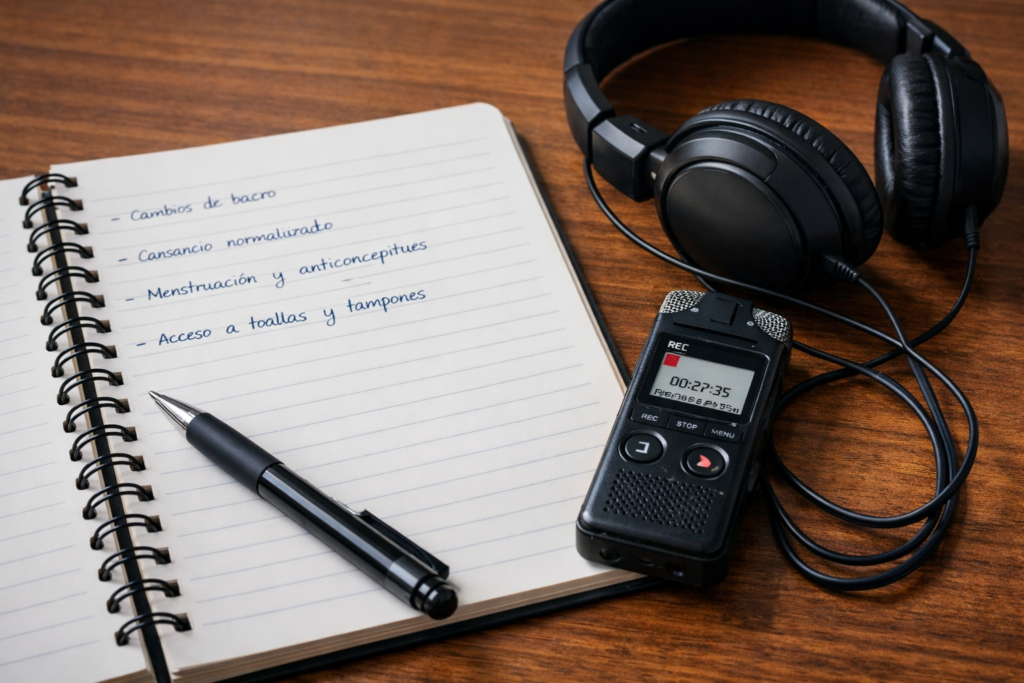
One of the central research lines of Flores en el mar involves conducting in-depth interviews with women working on cruise ships who have sailed across different itineraries around the world, including the South Atlantic.
To access these experiences, we use the method known as snowball sampling: one interviewee puts us in contact with another, and so on. In a sector characterized by constant mobility, temporary contracts, and geographical dispersion, each conversation opens new doors and allows us to reconstruct networks that do not appear in any formal records.
Although the analysis is still ongoing, some recurring themes have begun to emerge from the interviews conducted so far:
1. Motivations and Trajectories
Many women describe their entry into the sector as a combination of a desire for independence, the aspiration to travel, and a concrete economic opportunity.
Career paths are often highly mobile: frequent changes of ship, company, and role are common. Cruise ship work is experienced as a stage in life, as a temporary strategy (which can extend over more than ten years), or as part of a broader project of economic accumulation.
2. Working and Living Conditions On Board
Long working hours, the normalization of fatigue, and the difficulty of “switching off” in an environment where spaces for work and rest coexist are described as key features of everyday experience.
3. Support Networks and Relationships
Relationships among crew members are often described as intense and ambivalent. Strong bonds—both friendships and intimate or affective relationships—are formed in very short periods of time, yet they are shaped by the individual temporality of contracts.
Informal networks play a crucial role, as do digital platforms (Facebook, Instagram, WhatsApp), which function as spaces for exchanging information, sharing job opportunities, and developing care strategies.
4. Health and Self-Care
In the interviews, we discuss topics such as contraceptive use, rest management, and menstrual health on board.
All interviewees so far report that they must plan and bring menstrual hygiene products before embarking, as these are not available on the ship. Managing one’s cycle becomes part of the logistical preparation prior to each contract.
Some women have even experimented with different methods to suppress menstruation during the months they are on board, given the discomfort and the taboos surrounding menstruation in this context.
These accounts show how bodily dimensions that are often considered “private” become part of the practical organization of work in contexts of prolonged mobility.
More Than Data: Situated Experiences
The interviews do more than provide information about working conditions. They help us understand how women interpret their experiences, what they perceive as problematic, what they normalize, and which strategies they develop to sustain themselves in a demanding and mobile environment.
From the perspective of Transnational Social Protection, these voices contribute to mapping the resource environment available beyond what formal regulations establish.
An Invitation
If you currently work—or have worked—on cruise ships and would like to share your experience, we invite you to contact us. Each story adds another piece to understanding how life and work at sea are experienced—and protected, or not.
All information is treated anonymously.