Since the 1980s, the presence of women in the maritime industry has steadily increased. According to data from international shipping organizations, women represent around 1.2% of the global maritime workforce—approximately 25,000 workers—and 94% of them are employed on passenger vessels, particularly ferries and cruise ships.
Recent studies show that women at sea face specific challenges, including experiences of harassment, intimidation, and discrimination, as well as concerns related to sexual, reproductive, and psychological health in contexts of constant mobility.
These issues pose new challenges for institutions and actors involved in the social protection of transnational maritime labor. The historical predominance of men in the sector has meant that both regulations and institutions promoting and protecting labor rights have only recently begun to address issues related to women seafarers, in a context where the nation-state does not always constitute a sufficient scale to guarantee rights.
Rethinking Social Protection Beyond Borders
To address these questions, *Flores en el mar* draws on the perspective of Transnational Social Protection. This approach examines how people in contexts of mobility access—or fail to access—resources related to work, health, and care beyond their country of origin.
Applied to cruise ship labor, this framework allows us to ask concrete questions:
* Who do women workers turn to when facing labor and/or health-related problems?
* Are there effective mechanisms to report harassment or abuse?
* What risks do they identify in their daily work?
* What support networks do they rely on during their time at sea?
Why Study This from Uruguay?
Although cruise ship labor is global, these trajectories are also territorially grounded. Montevideo and Punta del Este are part of this transnational circuit. Making visible the working conditions of crews arriving at these ports implies recognizing the role of our territory within broader global economic dynamics.
Flowers at the sea aims to:
* Provide a socio-demographic characterization of women workers arriving in the South Atlantic.
* Understand the risks and challenges they identify in their work experiences.
* Map the resource environment available for their social protection.
* Analyze how gender and mobility intersect within this labor market.
Looking at What Remains Unseen
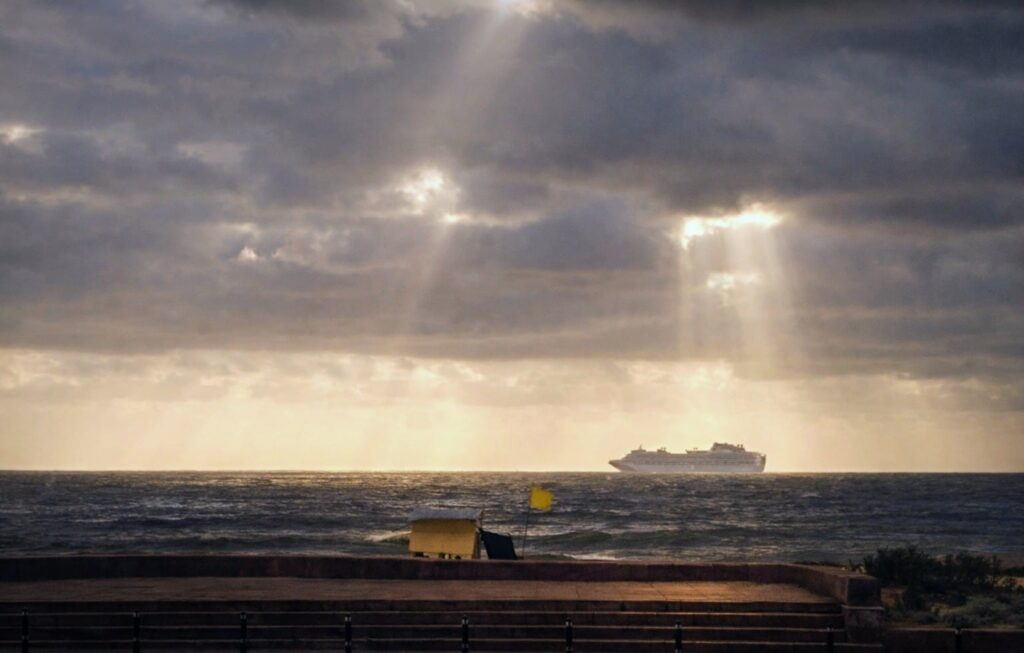
Cruise tourism is often portrayed through images of leisure, entertainment, and luxury. However, behind this visible scene lies a complex web of intense labor, constant mobility, and everyday strategies to sustain life in a highly demanding environment.
This platform emerges from a project that seeks to make these experiences visible, share research findings, and foster dialogue among workers, organizations, institutions, and the broader public.
An Open Invitation
If you currently work—or have worked—on cruise ships, if you are part of an organization related to the sector, or if you would like to collaborate with this research, we invite you to get in touch.
Because behind every successful season there are thousands of stories of work and life.
Contact form
References
International Seafarers Welfare and Assistance Network (ISWAN). (2023). *Women Seafarers' Health and Welfare Survey*.
Available on: https://www.seafarerswelfare.org/assets/documents/resources/women-seafarers-health-and-welfare-survey.pdf
Sampson, H., & Acejo, I. (2023). *The port-based welfare needs of women seafarers*. Cardiff University.